Planning a production basecamp?
Tell us your shoot dates, cast size, and location — we coordinate the full basecamp (talent trailers, honeywagons, production offices) with drivers and power. A coordinator replies with a plan and pricing, usually same day.
Every film production, from indie features to major studio blockbusters, relies on a well-organized basecamp as its operational nerve center. A properly planned basecamp keeps talent comfortable, departments efficient, and production running smoothly. This guide covers everything production coordinators need to know about planning and setting up a professional film basecamp.
Quick Answer: Film Basecamp Setup
Fleet Size: 5-10 trailers (indie) to 30-50+ (studio features)
Space Needed: 1-2 acres (small) to 3-5+ acres (large productions)
Setup Time: Full day (dawn to evening) for trailer placement
Key Trailers: Star wagons, H/M/W, production office, honeywagons
Lead Time: 4-6 weeks for trailer reservations
Budget Range: See our star wagon cost guide for pricing
What is a Film Basecamp?
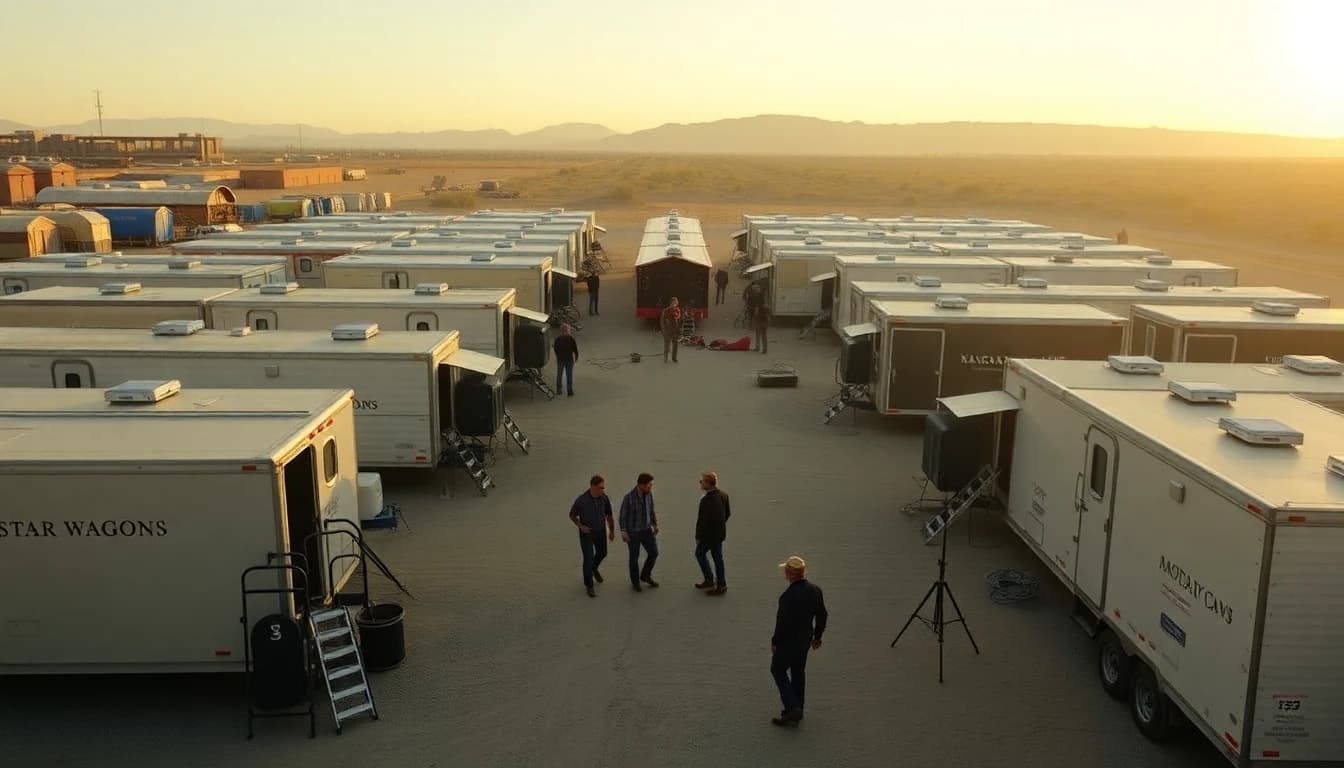
A film basecamp is the temporary headquarters for a production, typically positioned near but separate from the active filming location. It houses the entire supporting infrastructure needed to keep a production running:
- Talent trailers and green rooms
- Hair, makeup, and wardrobe departments
- Production offices and video village
- Catering and craft services
- Crew rest areas and facilities
- Equipment staging and storage
Basecamp Layout Planning
Site Selection Criteria
The ideal basecamp location balances several factors:
- Proximity to Set: Close enough for quick talent calls, far enough to avoid camera/sound interference
- Access: Easy entry/exit for large trailers and production vehicles
- Surface: Level ground, preferably paved or gravel (not soft grass that damages easily)
- Utilities: Access to power (or space for generators), water connections if available
- Size: Adequate space for all required trailers plus maneuvering room
Layout Zones
Professional basecamps are organized into functional zones:
Typical Zone Layout
- Talent Row: Star wagons and cast trailers, positioned for privacy and quick set access
- H/M/W Area: Hair, makeup, wardrobe trailers clustered together for efficiency
- Production Row: Production office, AD trailer, video village
- Catering Zone: Catering truck, dining tent, craft services
- Crew Area: Honeywagons, extras holding, crew parking
- Support Zone: Generators, fuel, equipment staging
Essential Basecamp Trailers
Talent Trailers
| Type | Size | For | Features |
|---|---|---|---|
| Star Wagon | 40-53 ft | Lead actors | Private suite, full bath, lounge |
| Double Banger | 40-48 ft | 2 cast members | Two private rooms, shared facilities |
| Triple Banger | 48-53 ft | 3 cast members | Three private rooms |
| Four Banger | 50-53 ft | 4 cast members | Four compact rooms |
Department Trailers
- Hair & Makeup Trailer: Multiple styling stations, good lighting, ventilation
- Wardrobe Trailer: Costume storage, fitting area, steamer hookups
- Production Office: Desks, phones, printer/copier, meeting space
- AD Trailer: Assistant directors' base of operations
- Video Village Trailer: Monitors, director and client seating
Support Trailers
- Honeywagon: Restroom facilities, sometimes with H/M stations - see our honeywagon rental guide
- Catering Truck: Full kitchen for meal preparation
- Grip/Electric Trailer: Equipment storage and staging
- Camera Truck: Secure camera equipment storage
For detailed information on talent accommodations, see our talent trailer rental guide.
"A well-organized basecamp is invisible to the audience but essential to every frame on screen. We've coordinated basecamps for productions from 10-unit indie shoots to 60+ trailer studio features. The key is matching the right trailer mix to production needs."
— Ben Kiser, Co-Founder, EventFleetRV
Fleet Size by Production Type
Production Fleet Guidelines
- 5-10 trailers total
- 2-4 talent trailers, 1 H/M/W, 1 production, 1-2 honeywagons
- 15-25 trailers total
- 6-10 talent trailers, 2-3 H/M/W, 2 production, 3-4 honeywagons
- 30-50+ trailers total
- 15-20 talent trailers, 4-6 H/M/W, 4+ production, 6+ honeywagons
Power and Utilities
Generator Requirements
Most basecamps run entirely on generator power:
- Tow-behind generators: 50-300 kW units for trailer power
- Distribution: Spider boxes and cable runs to each trailer
- Placement: Generators positioned downwind, away from talent areas
- Redundancy: Backup generator for critical systems
Typical Power Needs
| Trailer Type | Power Draw |
|---|---|
| Star Wagon (with A/C) | 30-50 amps |
| H/M/W Trailer | 50-100 amps |
| Production Office | 30-50 amps |
| Catering | 100-200 amps |
Water and Sanitation
- Water truck: Fresh water delivery for trailers without hookups
- Gray water: Collection and removal of sink/shower drainage
- Honeywagon service: Regular pumping of restroom facilities
- Portable sinks: Handwashing stations as required
Setup Timeline
Pre-Production
- 4-6 weeks out: Confirm trailer orders, reserve equipment
- 2-3 weeks out: Site survey, layout planning, utility arrangements
- 1 week out: Confirm delivery schedule, coordinate with locations
Setup Day
- Dawn: Transportation team arrives, begins trailer placement
- Morning: Trailers positioned according to layout plan
- Midday: Power distribution, hookups, leveling
- Afternoon: Interior staging, department setup
- Evening: Final walkthrough, ready for Day 1
Frequently Asked Questions
What is a film basecamp?
A film basecamp is the central hub for production operations, typically located near but separate from the actual filming location. It houses talent trailers, production offices, catering, hair/makeup/wardrobe departments, and crew facilities.
How many trailers do you need for a film production?
The number of trailers depends on production size. A typical feature film needs 15-30+ trailers including: star wagons for lead actors, double/triple bangers for supporting cast, honeywagons for H/M/W, production trailers, and crew facilities.
How much space is needed for a film basecamp?
A small production basecamp needs 1-2 acres, while large productions may require 3-5+ acres. Space requirements include trailer parking, vehicle access lanes, generator placement, catering tents, and parking for production vehicles.
Who manages basecamp on a film set?
The transportation department, led by the Transportation Coordinator and Transportation Captain, manages basecamp operations. They oversee trailer placement, vehicle logistics, and coordinate with locations department for site management.
Basecamp Best Practices
- ☑️ Create detailed layout diagrams before setup day
- ☑️ Position talent trailers for privacy (not facing crew areas)
- ☑️ Keep generators away from talent and quiet areas
- ☑️ Plan for weather—provide covered walkways if needed
- ☑️ Establish clear traffic patterns for vehicles
- ☑️ Mark fire lanes and emergency access routes
- ☑️ Post directional signage for departments
- ☑️ Have backup plans for trailer or generator failures
Coordinate Your Production Basecamp
A well-planned basecamp is invisible to the audience but essential to every frame on screen. Getting the right trailers, positioned properly, with reliable utilities and support services makes the difference between a smooth production day and constant interruptions.
Our team coordinates complete basecamp packages for productions of all sizes. From single-unit indie shoots to major studio features requiring 50+ trailers, we handle the logistics so you can focus on making great content.
Ben co-founded EventFleetRV and oversees all fleet operations and logistics. With extensive experience coordinating RV deployments for NASCAR events, major festivals, and corporate productions, he ensures every fleet delivery exceeds client expectations.
Planning a Production?
Let us coordinate your complete basecamp setup. We'll handle trailer coordination, logistics, and on-site support for your production.
Get Production QuoteMore Film Production Guides
Talent Trailer Rental Guide
Everything you need to know about star wagons, bangers, and talent accommodations on set.
Honeywagon Rental Guide
Complete guide to production honeywagons for hair, makeup, wardrobe, and restroom facilities.
Star Wagon Rental Costs
Detailed pricing breakdown for production trailers, from basic bangers to luxury star wagons.
Workforce Housing Guide
Extended crew housing solutions for long-term productions and remote locations.