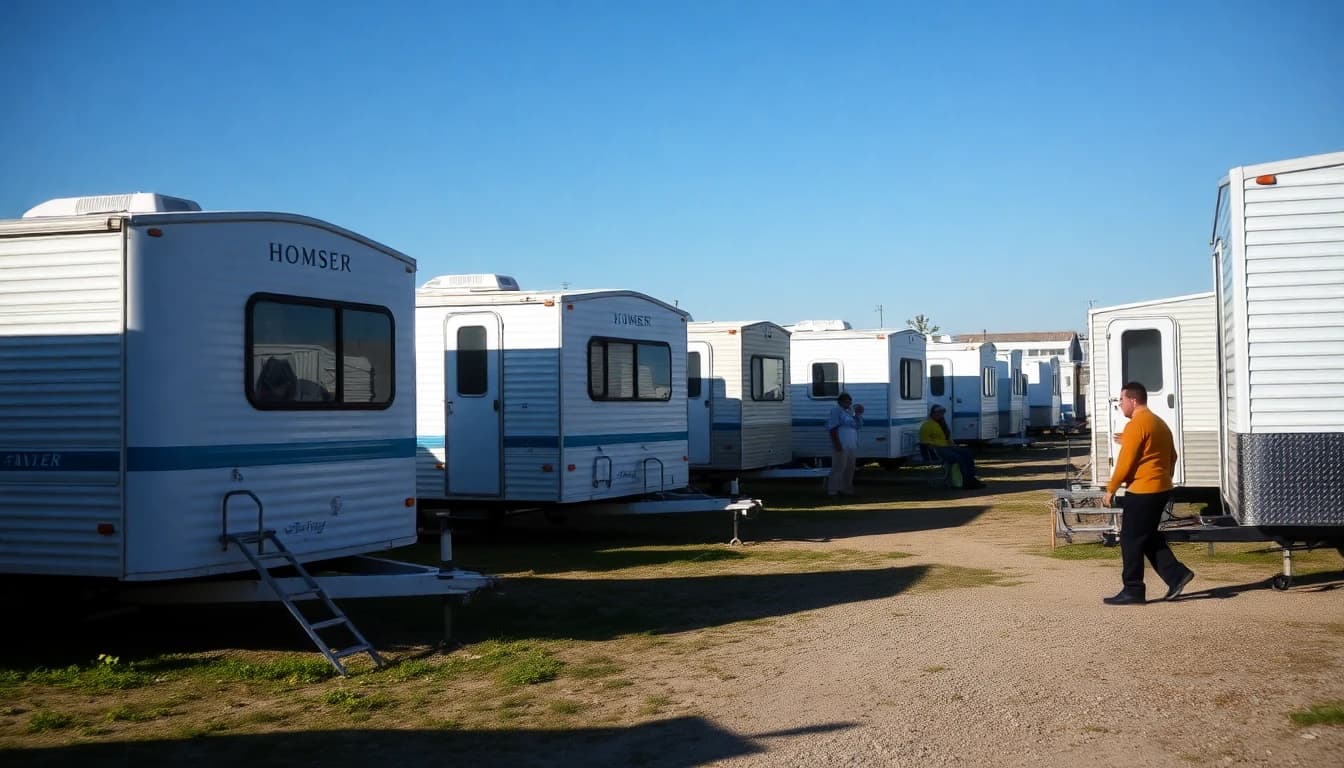
Need units placed after an event?
Tell us the location, the number of households and the expected duration. We will tell you what is genuinely available in that region rather than a response-time promise.
This page quotes federal rules; it is not legal advice. Eligibility and entitlement depend on your specific circumstances and on the declaration in question. Confirm anything here with FEMA, your insurer or your own adviser before acting on it.
The clock is already running when you hear about it
44 CFR 206.110(e) provides that "FEMA may provide assistance under this subpart for a period not to exceed 18 months from the date of declaration." The Assistant Administrator may extend that where extraordinary circumstances warrant.
Read the anchor point carefully. Eighteen months from the declaration, not eighteen months of assistance from whenever you are approved. Every week spent deciding whether to apply, gathering documents or waiting to see how the insurance goes is a week subtracted from the same window.
What waiting costs
A household that takes three months to apply has not delayed the start of an 18-month entitlement; it has spent three of the eighteen. On a rebuild that runs long, which after a widespread event most do, those months come off the end when they are hardest to replace. Apply early even if you are unsure, and resolve the details afterwards.
The first housing offer is a decision, not an opening bid
Among the conditions in 44 CFR 206.110, applicants must accept the first housing offer, and refusal may result in forfeiture of assistance.
That inverts how people instinctively behave. The natural response to an unsuitable offer is to decline and wait for something better. Under this rule, declining can end the assistance rather than defer it.
Know your alternatives before the offer arrives
If you already understand what temporary housing exists in your area, what your insurance will fund and what an RV placed on or near your own property would involve, you can evaluate an offer in hours rather than days. If you have not thought about it, the first offer arrives as a forced choice with a forfeiture risk attached. That preparation is free and it has to happen before, not during.
The $25,000 cap does not cover what most people assume
44 CFR 206.110(b) states that "No individual or household will receive financial assistance greater than $25,000 under this subpart with respect to a single major disaster or emergency," applied to housing repair or replacement and, separately, to Other Needs Assistance. FEMA adjusts those limits annually for the Consumer Price Index.
The exclusions matter as much as the number. Rental assistance, lodging expense reimbursement and expenses for accessibility-related improvements for individuals with disabilities are excluded from those maximums.
So temporary housing money is not competing with your repair money in the way people assume. That is genuinely good news and it is not widely understood, which is why households sometimes ration their own temporary accommodation out of a fear of eating into a cap that does not apply to it.
Insurance first, then the gap
42 U.S.C. § 5155(c) provides that a person receiving federal assistance "shall be liable to the United States to the extent that such assistance duplicates benefits available to the person for the same purpose from another source."
Available, not claimed. Additional Living Expense cover sitting unclaimed on a homeowners policy is a benefit available to you for temporary housing, and taking federal assistance alongside it can create a debt rather than a windfall. FEMA cannot provide assistance where other sources already have.
There is a documented route through: § 5155(b)(1) permits assistance where the person "agrees to repay all duplicative assistance to the agency providing the Federal assistance." That is how bridging works while a claim is open, and it is an arrangement to enter deliberately rather than to stumble into.
The sequence that keeps both doors open
File the insurance claim first and get the coverage position in writing, including any denial. Apply to FEMA early regardless, because of the 18-month clock. Approach federal assistance for the documented gap with the denial in hand rather than running both in parallel and reconciling later. Our full treatment of the insurance side is in the ALE and duplication guide.
What most people get wrong: expecting a response-time promise
An earlier version of this page carried cost ranges and implied deployment speeds. Both were unsourced, and the second is the more misleading of the two.
After a widespread event the constraint is not willingness, it is regional supply. Every operator within reach is drawing from the same pool of units, the roads that get units in are the roads everyone is using, and a site that cannot take a coach cannot take one however fast it arrives. Anyone quoting a guaranteed response time before knowing the event, the region and the site is quoting a marketing figure.
What we can tell you honestly is what is available in a specific region for a specific event, and what the access constraints are. That is a phone call, not a published number.
"These calls come in at the worst moment of somebody's year and the temptation is to promise a truck tomorrow. I would rather tell them the truth about what is in the region and then move fast on what is real. The thing I always say first is apply now, because the eighteen months started when the declaration did, not when they get round to the paperwork. That one sentence is worth more than anything I can put on a trailer."
— Ben Kiser, Co-Founder, EventFleetRV
Do it in this order
- Apply to FEMA early. The 18-month period runs from the declaration date.
- File the insurance claim in parallel and get the coverage position in writing.
- Understand your alternatives before a housing offer arrives, since refusing one carries a forfeiture risk.
- Do not ration temporary housing out of fear of the $25,000 cap; rental and lodging assistance sit outside it.
- Read § 5155 before accepting assistance alongside an open insurance claim.
- Keep every receipt, and reconstruct a baseline of normal spending for the insurance side.
- Confirm site access for a coach early: grade, width, overhead clearance and utilities.
Frequently Asked Questions
How long does FEMA housing assistance last?
44 CFR 206.110(e) provides that "FEMA may provide assistance under this subpart for a period not to exceed 18 months from the date of declaration," with the Assistant Administrator able to extend that timeframe where extraordinary circumstances warrant. The clock runs from the declaration date rather than from your application, so time spent deciding whether to apply comes out of your own window.
Can you turn down a FEMA housing offer and wait for a better one?
Not without risk. Under 44 CFR 206.110, applicants must accept the first housing offer, and refusal may result in forfeiture of assistance. That makes the first offer a decision point rather than an opening position, and it is worth knowing what your alternatives actually are before one arrives.
Is there a cap on FEMA assistance, and does it include temporary housing?
44 CFR 206.110(b) states that "No individual or household will receive financial assistance greater than $25,000 under this subpart with respect to a single major disaster or emergency," applied separately to housing repair or replacement and to Other Needs Assistance, and adjusted annually for the Consumer Price Index. Rental assistance, lodging expense reimbursement and accessibility-related improvements are excluded from those maximums.
Can you take FEMA assistance and insurance for the same housing?
No. 42 U.S.C. § 5155(c) makes a recipient "liable to the United States to the extent that such assistance duplicates benefits available to the person for the same purpose from another source." The statute says available, not claimed, so unclaimed Additional Living Expense cover on a homeowners policy still counts. File the insurance claim first and approach federal assistance for the documented gap.
How quickly can RV housing be deployed after a disaster?
That depends on unit availability in the region, road access, and whether the site can take a coach at all. What we will not do is publish a response-time promise we cannot stand behind, because after a widespread event the binding constraint is usually regional supply and access rather than willingness. Tell us the location and headcount and we will give you a real answer for that event rather than a marketing figure.
Sources
Both checked September 8, 2026.
- 44 CFR § 206.110 — Federal assistance to individuals and households — the 18-month period from the date of declaration at (e), the $25,000 maximum and its CPI adjustment and exclusions at (b), the first-offer acceptance condition, and the bar on assistance where other sources have already provided.
- 42 U.S.C. § 5155 — Duplication of benefits — liability for benefits "available" at (c) and the repayment-agreement route at (b)(1).
Related Guides
Ben co-founded EventFleetRV and oversees all fleet operations and logistics. With extensive experience coordinating RV deployments for NASCAR events, major festivals, and corporate productions, he ensures every fleet delivery exceeds client expectations.
A Straight Answer About What Is Available
Tell us the location and the households and we will tell you what the region actually has, and what the access constraints are, rather than a response-time promise.