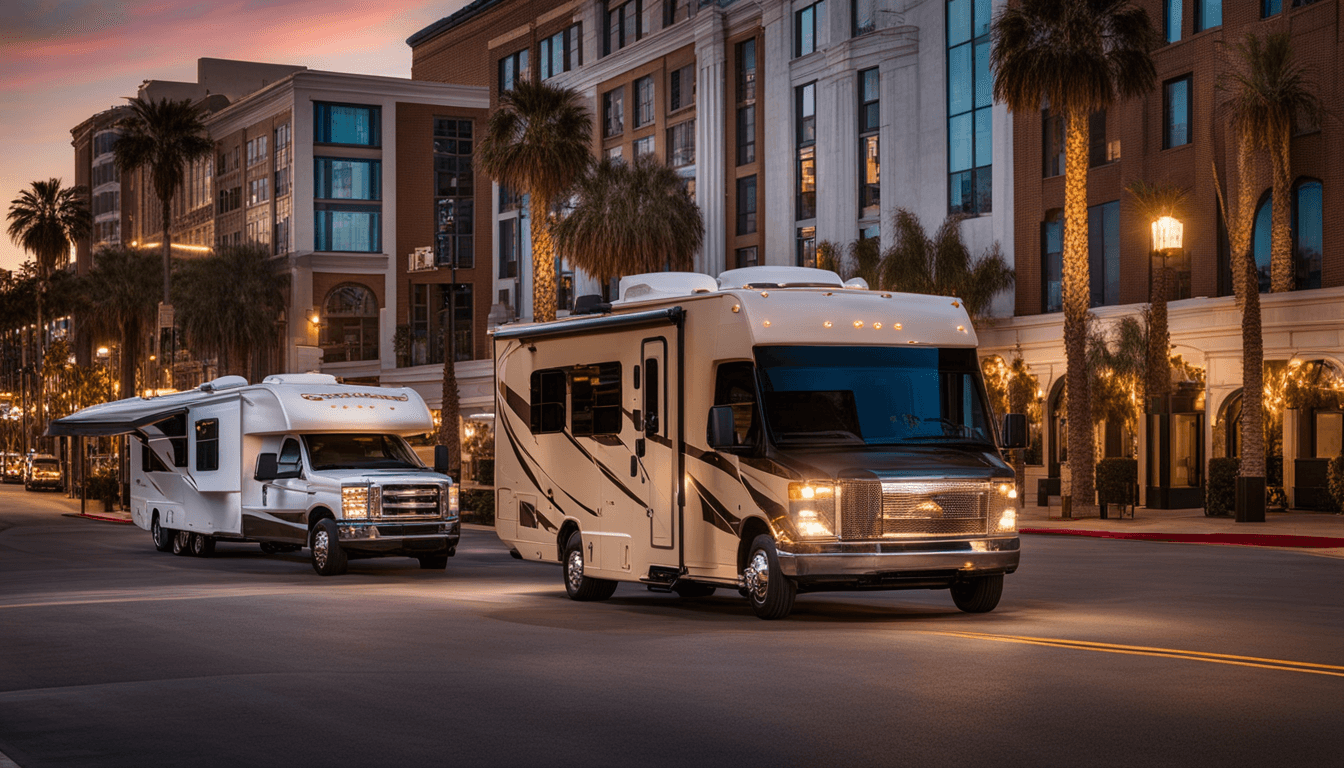
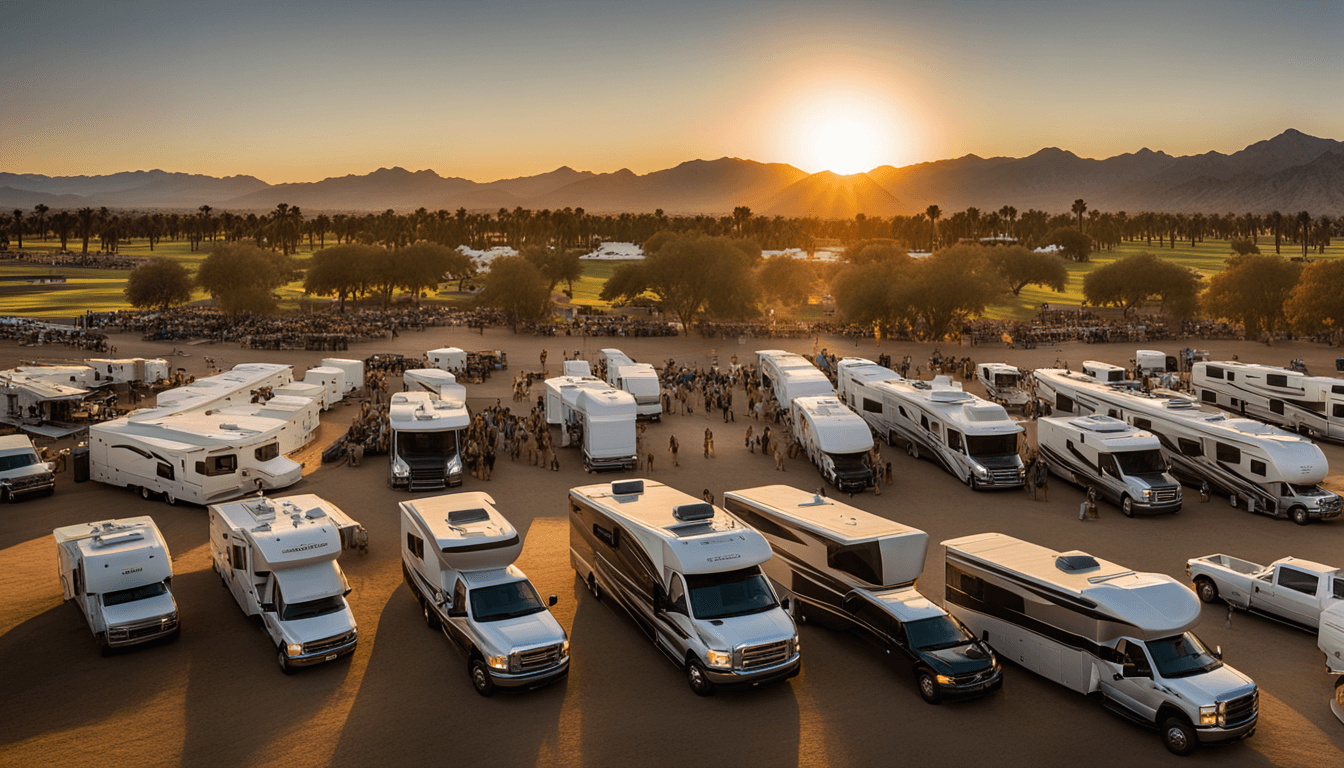
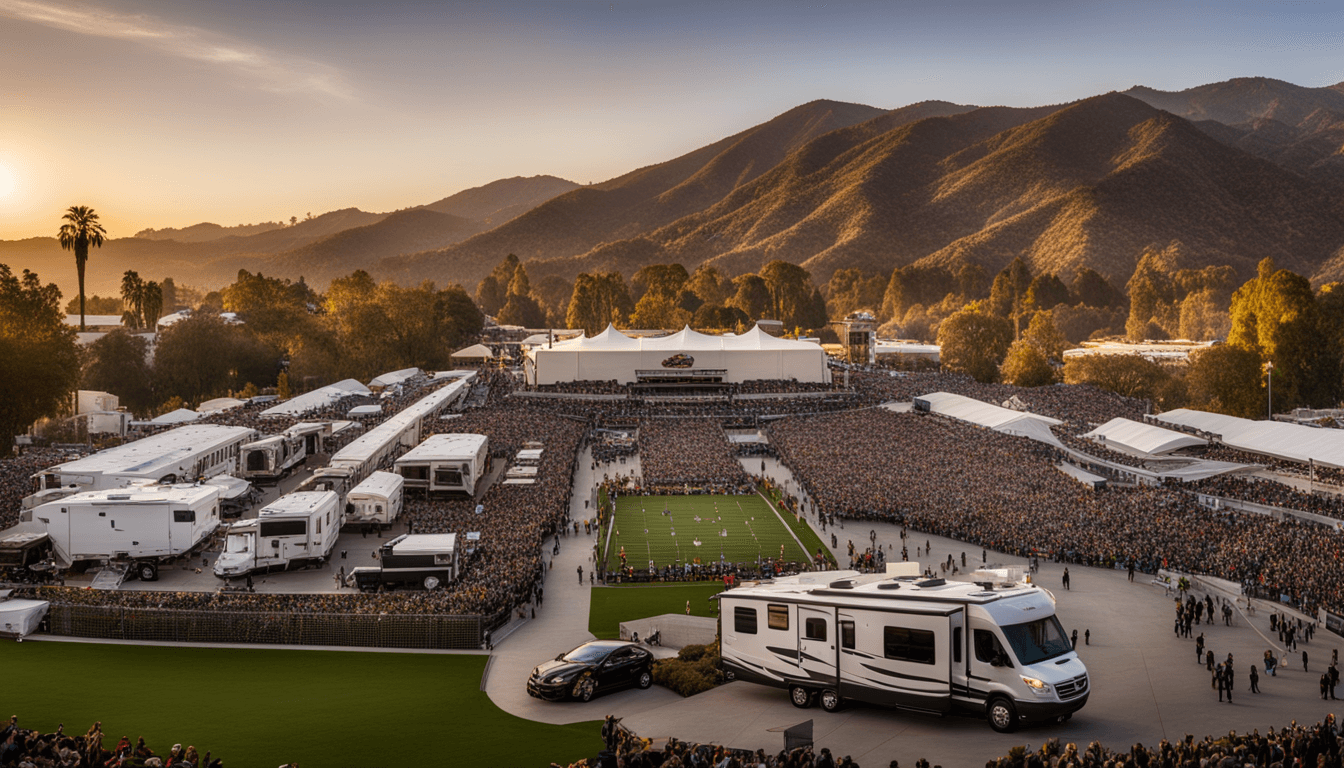
California is one of the markets we are asked to coordinate most, and it splits into two very different jobs: festival hospitality in the Coachella Valley and film and television production across Los Angeles.
California is really two markets that share a state line. The first is festivals: Coachella and Stagecoach share the Empire Polo Club in Indio but run opposite RV policies: Stagecoach camps RVs on site, Coachella prohibits motorhomes entirely and pushes them to private parks across the valley. Those weekends book out well ahead and each has its own permit and camping rules. The second, and the steadier one, is film and television production in and around Los Angeles — talent trailers, honeywagons, hair/makeup, wardrobe, and production offices moving between studio lots and location basecamps. Two things separate operators who actually know California from those who don't. First, the state's CARB diesel and generator emissions rules dictate which units and power sources can legally work a shoot — get that wrong and equipment gets turned away. Second, set-proximity noise: productions shooting near sound need low-noise generators or shore power, planned around the sound department rather than bolted on afterward. We spec, source, deliver, and invoice the whole range through one coordinator — from a single talent trailer to a festival hospitality row.
Regional Considerations
California's two demand centers sit far apart and run on different clocks. Indio's Coachella Valley festivals concentrate in the spring and book three to four months out, while Los Angeles production runs year-round. Statewide, CARB emissions compliance governs which diesel units and generators can legally operate, and set-proximity work needs low-noise power — both are spec questions to settle before committing, not after.
Local Tips for California
California's CARB diesel and generator rules dictate which units can legally work a shoot — confirm compliance before you commit, not after
Sets near sound need low-noise generators or shore power — specify it up front so power is planned around the sound department
Coachella and Stagecoach are in Indio, not LA — their own permits, camping, and timelines; plan them 3–4 months out
LA traffic makes generous travel windows and smart basecamp staging part of the plan, not an afterthought
Major cities for RV fleet rental in California: Los Angeles, San Francisco, San Diego, Sacramento, Napa, Palm Springs, Indio
Nearby states: Oregon, Nevada, Arizona
Top venues served: Hollywood Studios, Coachella Valley, SoFi Stadium, Oracle Park, Moscone Center, Long Beach Convention Center, Auto Club Speedway
Event types: film production, music festivals, tech conferences, wine country events, motorsports, corporate events
Every claim in this section is transcribed from the venue's or authority's own site, with the date we read it. Where a source is silent, we say so instead of estimating.
California caps vehicles at 40 feet, with a route-specific exception
California Vehicle Code section 35400(a) states that "A vehicle may not exceed a length of 40 feet." Caltrans explains the exception: "45' motorhomes are allowed on interstates and on those State routes that can accommodate them." A motorhome is a "house car" under CVC 362.
What to do about it
Decide the coach length against the route, not just the destination. Under 40 feet you are on the ordinary network. At 40 to 45 feet you are confined to interstates and specific approved State routes for the whole journey.
What it costs if you don't
A 45-foot coach routed off the designated network in California is not merely inconvenienced, it is outside the exception that makes it legal there at all.
The one-mile rule that decides whether a 45-foot coach can reach your venue
Caltrans states that "45' motorhomes may exit the designated route for fuel, food, and lodging provided the access is signed and the service is within one road mile of the 'identified' exit." The exit must carry a Service Access sign, an "S" on the back of a truck graphic, showing the route has been evaluated and approved by State and local engineers.
What to do about it
Measure the distance from the nearest signed exit to the venue before committing to a 45-foot unit in California. One road mile is the published allowance, and the permitted reasons are fuel, food and lodging.
What it costs if you don't
Caltrans does not publish what happens beyond one mile, and we are not going to invent it. What is clear is that a venue further than that from an approved exit is not reachable under the published exception, and the answer is a shorter coach rather than a longer route.
Sources
Caltrans — 45′ Motorhomes — the CVC 35400(a) 40-foot basic limit and the interstates-and-approved-State-routes exception for 45-foot motorhomes. Checked September 11, 2026.
Frequently Asked Questions
Do your units meet California emissions rules?
CARB rules dictate which diesel units and generators can legally operate in California, on a shoot or anywhere else. We spec compliant units so a production doesn't lose time over equipment that can't be on set.
Can you coordinate production trailers for an LA shoot?
Film and TV is our steady California demand — talent trailers, honeywagons, hair/makeup, wardrobe, and production offices for shoots across the LA area, spec'd to your rider and delivered to the lot or location.
Can you provide low-noise power for shooting near sound?
Yes — set-proximity work needs quiet generators or shore power. We plan power around the sound department rather than the other way around.
How far ahead should we book for Coachella or Stagecoach?
Those Indio festivals concentrate demand into a few spring weekends and run opposite RV policies — Stagecoach camps RVs on site, Coachella prohibits motorhomes and they go to private parks nearby — a separate plan from an LA production. We coordinate both, each on its own timeline.
Get a customized quote for fleet deployments anywhere in California. Our team knows the California market and can source the perfect fleet for your needs.